
When Is Rainy Season in Thailand? A Complete Month-by-Month Travel Guide
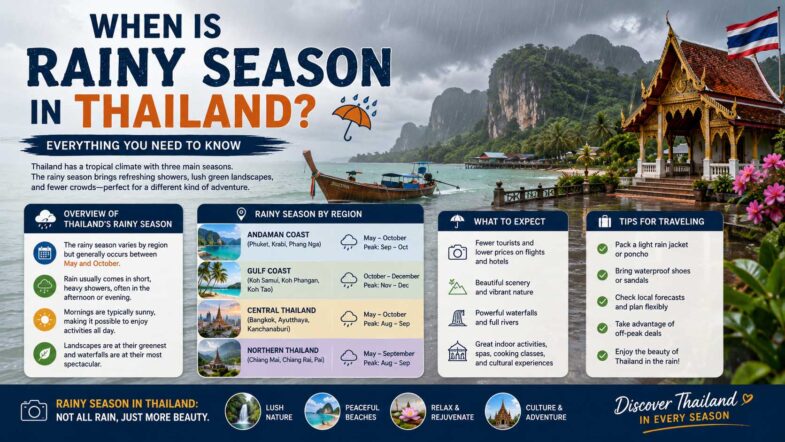
If you’re wondering when is rainy season in Thailand, the short answer is roughly May through October, although the exact timing depends on which part of the country you’re visiting. Thailand’s tropical climate means the rainy season doesn’t bring nonstop rain. Instead, many days feature warm sunshine followed by short but heavy afternoon showers.
Knowing when the wet season begins—and how it varies between regions—helps you choose the best destinations, pack wisely, and enjoy your trip while avoiding weather surprises.
When Is Rainy Season in Thailand?
For most of the country, when is the rainy season in Thailand? The southwest monsoon typically arrives in May and lasts until October.
Rainfall usually follows this pattern:
| Month | Rainfall | Travel Conditions |
|---|---|---|
| January | Very low | Excellent |
| February | Very low | Excellent |
| March | Low | Hot and sunny |
| April | Moderate | Very hot with occasional storms |
| May | Increasing | Start of rainy season |
| June | Moderate | Short daily showers |
| July | Moderate to high | Greener landscapes |
| August | High | Frequent rain |
| September | Highest | Wettest month in many regions |
| October | High, improving late month | Rain begins easing |
| November | Low | Excellent travel weather |
| December | Very low | Peak tourist season |
Even during the wettest months, rainfall often comes in bursts rather than lasting all day. Many travelers are surprised by how much sightseeing they can still enjoy.
If you’re deciding between different travel periods, comparing this guide with best month to visit thailand can help you choose the season that matches your priorities.
Understanding Thailand’s Weather by Region
One reason travelers ask, when is it rainy season in Thailand, is because weather varies across the country.
Central Thailand
Bangkok, Ayutthaya, and nearby areas experience rain mainly from May through October. September is usually the wettest month.
Morning sightseeing works well because showers often arrive later in the day.
Northern Thailand
Chiang Mai and Chiang Rai also receive most rainfall between May and October. The mountains become incredibly green during this period, making waterfalls especially beautiful.
Road conditions in remote areas can occasionally be affected after heavy storms.
Andaman Coast
Popular destinations include:
- Phuket
- Krabi
- Koh Phi Phi
- Koh Lanta
This side of Thailand experiences heavier rainfall from May to October due to the southwest monsoon. Sea conditions may also become rough, affecting boat tours.
Gulf Coast
The Gulf islands—including Koh Samui, Koh Phangan, and Koh Tao—follow a different weather pattern.
They generally receive less rain during mid-year, with their wettest months often falling between October and December.
This regional difference gives travelers flexibility when planning a beach holiday.
What Is Thailand Like During the Rainy Season?
The rainy season offers a completely different travel experience compared to peak tourist months.
Advantages
- Smaller crowds at major attractions
- Lower hotel prices
- Beautiful green landscapes
- Cooler afternoons after rain
- Easier restaurant reservations
- Better photography with dramatic skies
Many experienced travelers actually enjoy visiting during the rainy season because popular sites feel much less crowded.
Disadvantages
On the other hand, you should expect:
- Afternoon thunderstorms
- Humid weather
- Occasional flooding in cities
- Boat tour cancellations
- Muddy hiking trails
- Reduced visibility for snorkeling and diving
Flexibility is your biggest advantage during this season.
Month-by-Month Breakdown
May
Rainy season begins.
Humidity increases, but rainfall remains fairly manageable. Beaches are quieter, and hotel prices start dropping.
June
Rain becomes more regular.
Many days still offer several hours of sunshine before afternoon showers.
July
July is a popular shoulder-season month.
National parks become lush, waterfalls are flowing strongly, and tourist numbers remain lower than winter.
August
Rainfall increases across much of Thailand.
Outdoor plans may need backup options, especially in southern beach destinations.
September
If you’re asking when is the rainy season in Thailand?, September is generally considered the wettest month.
Heavy rainfall can occur several days each week, although sunny periods still appear between storms.
October
Weather gradually improves toward the end of the month.
Northern Thailand often starts drying out first, while some islands remain wet longer.
Is Rainy Season a Good Time to Visit Thailand?
Absolutely—if your expectations match the season.
Rain rarely ruins an entire vacation.
Instead, travelers who:
- start activities early,
- stay flexible,
- keep indoor attractions in mind,
- and monitor local weather forecasts,
often enjoy an excellent trip at a lower cost.
If your main priority is perfect beach weather every day, visiting between November and February remains the safer choice.
Cheapest Time to Visit
Rainy season usually means better value.
You can often find:
- Hotel discounts of 20–50%
- Lower domestic flight prices
- Fewer crowds on tours
- Better availability at popular resorts
Luxury hotels become surprisingly affordable during this period.
Budget travelers can stretch their money much further.
Best Things to Do During Rainy Season
Wet weather doesn’t stop Thailand from being exciting.
Great rainy-season activities include:
Visit Temples
Bangkok’s Grand Palace, Wat Pho, and Chiang Mai’s temples are excellent regardless of weather.
Explore Local Markets
Covered markets offer fantastic food, shopping, and cultural experiences.
Enjoy Thai Cooking Classes
Cooking schools operate year-round and provide a fun indoor activity.
Relax at Cafés
Thailand’s café scene has grown rapidly, especially in Bangkok and Chiang Mai.
Experience Waterfalls
Rain brings waterfalls to life.
National parks become incredibly scenic after several weeks of rainfall.
Sample 7-Day Rainy Season Itinerary
| Day | Destination | Activity |
|---|---|---|
| 1 | Bangkok | Temples and street food |
| 2 | Bangkok | Museums and markets |
| 3 | Chiang Mai | Old City exploration |
| 4 | Chiang Mai | Cooking class |
| 5 | National Park | Waterfalls and nature |
| 6 | Local villages | Cultural experiences |
| 7 | Departure | Shopping and cafés |
This itinerary mixes outdoor attractions with indoor alternatives, making weather disruptions less stressful.
What to Pack
Packing properly makes rainy season much easier.
Bring:
- Lightweight rain jacket
- Small umbrella
- Waterproof backpack cover
- Sandals with grip
- Breathable clothing
- Power bank
- Dry bags for electronics
- Quick-drying towel
- Mosquito repellent
- Waterproof phone pouch
Avoid heavy cotton clothing because it takes longer to dry.
Transportation During Rainy Season
Transportation generally operates normally.
However:
- Ferries may be delayed during storms.
- Domestic flights occasionally experience weather-related delays.
- Mountain roads can become slippery.
- Urban traffic often becomes heavier after rainfall.
Allow extra travel time, especially on transfer days.
Accommodation Tips
Hotels with good drainage, covered walkways, and indoor facilities offer the best rainy-season experience.
Properties with:
- swimming pools,
- restaurants,
- spas,
- fitness centers,
provide extra flexibility if an afternoon storm interrupts your plans.
Booking accommodation with free cancellation also gives peace of mind.
Food to Enjoy During Wet Weather
Rainy afternoons are perfect for warming up with Thai comfort food.
Try:
- Tom Yum Goong
- Khao Soi
- Green Curry
- Massaman Curry
- Pad Kra Pao
- Mango Sticky Rice
Street food remains excellent during rainy season, although choosing busy vendors helps ensure freshness.
Safety Tips
Thailand is generally safe during rainy season, but weather requires extra awareness.
Remember to:
- Check weather forecasts daily.
- Avoid swimming when red warning flags are displayed.
- Stay away from flooded roads.
- Wear shoes with good traction.
- Keep valuables in waterproof bags.
- Carry cash in case electronic payment systems temporarily fail during storms.
Following local advice is always the safest approach.
Rainy Season in Thailand vs Other Tropical Destinations
Travelers often compare Southeast Asian weather patterns before booking.
If you’re planning multiple tropical vacations, you’ll notice similarities with the rainy season in bali, where showers also tend to arrive in short bursts rather than lasting all day.
Likewise, travelers considering Central America may find useful comparisons in guides covering the rainy season in costa rica, although rainfall patterns and regional climates differ significantly from Thailand.
Family and Solo Travel
Families often enjoy rainy season because attractions feel less crowded and accommodation prices are lower.
Meanwhile, solo travelers benefit from:
- cheaper hostels,
- easier transportation bookings,
- more opportunities to meet fellow travelers in cafés and hostels.
Parents should simply pack extra clothing for children since tropical rain showers can appear quickly.
Common Mistakes to Avoid
Many first-time visitors assume rain means constant bad weather.
Instead, avoid these mistakes:
- Planning every activity outdoors.
- Ignoring regional weather differences.
- Forgetting waterproof gear.
- Booking non-refundable island tours months ahead.
- Underestimating humidity.
- Packing heavy jackets instead of lightweight rainwear.
A little flexibility usually leads to a much smoother trip.
If you’re also considering Indonesia, reading about the best time to visit bali or the best time to go to bali can help you understand how tropical weather patterns differ across Southeast Asia.
Frequently Asked Questions
When is the rainy season in Thailand?
For most regions, the rainy season runs from May through October, with September often receiving the heaviest rainfall.
Does it rain every day?
Not usually.
Many days feature sunshine followed by one or two heavy afternoon showers.
Is Thailand cheaper during rainy season?
Yes.
Flights, hotels, and tours are often less expensive than during the peak season.
Can you still visit the islands?
Yes, although some islands have different rainy seasons. Gulf islands like Koh Samui often experience better weather during mid-year than Phuket or Krabi.
Should I avoid traveling during rainy season?
Not at all.
If you’re comfortable with occasional rain and plan flexible activities, rainy season can be an excellent time to visit Thailand.
Plan Around the Weather, Not Against It
The answer to when is rainy season in Thailand depends on where you’re traveling, but for most destinations, expect wetter conditions from May through October. While you’ll likely encounter tropical showers, you’ll also enjoy fewer crowds, lush scenery, lower prices, and a more relaxed atmosphere.
Rather than avoiding the rainy season altogether, build a flexible itinerary, pack for changing weather, and take advantage of the unique experiences this greener side of Thailand has to offer. With the right expectations, a rainy-season trip can be just as rewarding as visiting during the dry months.